

Introduction
What if a single change in your barn could lift animal welfare, cut bills, and simplify daily work? I’ve seen that happen when people upgrade the fixture — and it’s not magic. led barn lights now offer control, efficiency, and clarity in ways older systems never did (think smarter schedules and clearer inspection hours). Recent field reports show farms cutting energy use by up to 60% after retrofits. So where do you start, and which trade-offs matter most to your operation?
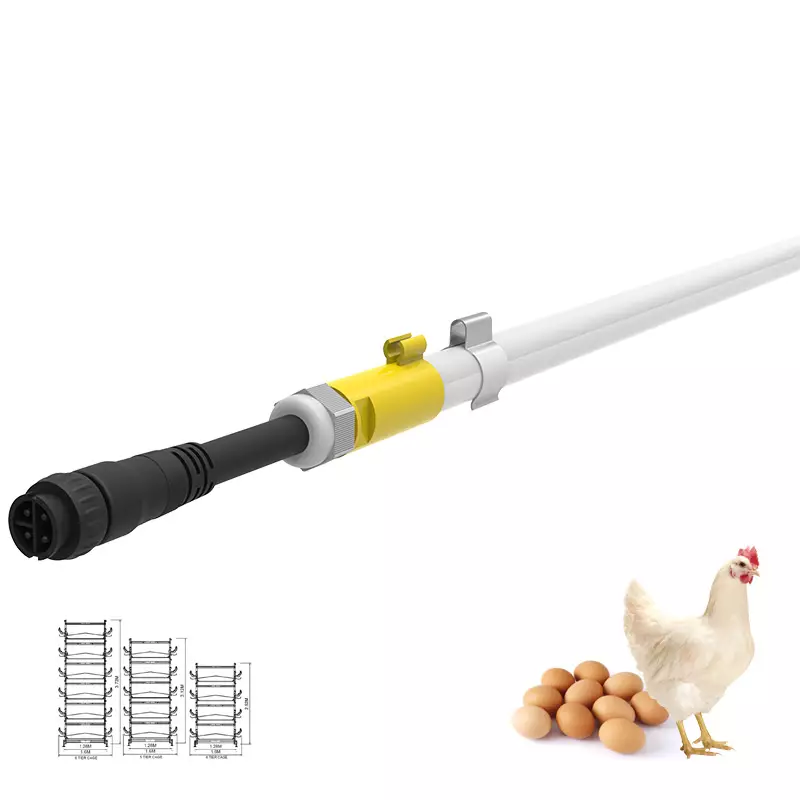
I write from hands-on experience and from conversations with growers, electricians, and product teams. My aim here is to give you a clear, practical comparison—what works, what fails, and where the gains actually show up. Expect simple charts in your head, not dense jargon. We’ll move from root problems to real solutions, and I’ll point out the metrics you should watch. Ready? Let’s dig into the pain points that matter next.
Part 2 — Deep Dive: Flaws in Traditional Poultry Lighting Approaches
poultry lighting has long been treated as a basic utility: overhead bulbs, timers, and occasional tweaks. That model breaks down fast when you need precision. I keep returning to a few recurring issues: uneven lumen output across the barn, poor CRI that masks health cues in birds, and legacy power converters that flicker or fail under load. These are not small annoyances. They affect feed conversion, behavior, and mortality risk. Look, it’s simpler than you think: inconsistent light distribution means some birds overcompete while others stay in the shadows — and productivity follows the light.
What’s Broken?
From my visits, two technical truths pop up. First, analog timers can’t manage a nuanced photoperiod for modern flocks. Second, a mismatched ballast or low-quality power converter shortens fixture life and causes maintenance headaches. I’ve watched managers replace bulbs every few months — wasteful and demoralizing. Farmers tell me they lose trust in the system (— funny how that works, right?), and that leads to ad hoc fixes rather than planned upgrades. Those quick fixes hide larger design flaws: poor heat dissipation, inadequate IP ratings for dust and moisture, and designs that ignore animal-centric metrics like light spectrum and transition speed.
Part 3 — New Technology Principles and a Forward-Looking Comparison
Now let’s look forward. I favor solutions built on a few simple principles: uniform lumen output, controllable spectral tuning, and robust power management. Modern LED systems pair efficient diodes with smart drivers and better heat sinks. That mix shrinks energy use and extends lifetime. More important, it gives you the tools to set photoperiods and spectral shifts that align with bird biology. I’m talking about real control: gradual dawn/dusk ramps, dimming schedules, and targeted zones that reduce stress and improve feed efficiency — and yes, that’s real.
What’s Next?
Compare three practical paths: retrofit with quality LEDs and better drivers; install smart fixtures with zone control and cloud schedules; or adopt fully integrated systems with sensors and edge computing nodes that react to barn conditions. Each step lifts outcomes, but costs and complexity rise too. For many growers, the middle path—smart fixtures with local controls—hits the sweet spot. It delivers measurable returns without heavy IT overhead. I’ve seen farms cut vet visits and improve uniformity in months, not years.
Before you decide, keep three evaluation metrics top of mind: energy efficiency measured in kWh per square foot, effective lumen distribution across usable space, and spectrum control tied to behavior outcomes. Ask for demo data, not just specs. Test a small zone, watch for changes, and adjust. I prefer to pilot for 30–60 days and measure feed conversion and activity levels. If you want a vendor to earn your trust, they should accept that test. In my view, upgrades are investments in predictability, not just savings. For practical tools and reliable products, I recommend checking resources from szAMB — they’ve been useful in projects I’ve guided, and they focus on real-world returns.
 Admin