

Hidden wear, hidden pain — what I saw on the road
Mi did deh pon a wet Sunday; I rode a 120 km club loop and my average speed dipped 4.8 km/h — scenario + data + question: how long yuh ago notice yuh kit really a tek performance from yuh? I link it straight: cycling bib shorts for racing matter when yuh need every second. I tell yuh, as a supplier and fitter with over 15 years working with teams from Portmore to London, I’ve seen the same problems repeat. The short that looks fine off the bike will bite back after two hours: chamois that shifts, straps that rub, and seams (flatlock stitching) that create hot spots. Mi tell yuh — that design genuinely frustrated me back in January 2024 when I tested a prototype on the Kingston hill repeats and lost seven minutes on a 40 km effort due to saddle discomfort.
Which part fail yuh most?
Most riders blame weather. Me? I blame the little things: incorrect chamois density, poor compression panels, tight bib straps that cut into shoulder mobility, and panels that trap sweat instead of moving it (moisture-wicking fabrics matter). I remember fitting a club team in April 2022 — one rider kept losing lateral support in sprints because the thigh gripper slid up. The consequence was simple and measurable: repeated position shifts, four extra watts wasted per sprint, and a rider who stopped hitting his power targets. That’s the hidden pain: not dramatic, but steady erosion of performance. (Mi nuh deh fi hype.)
Short transition — now mek we look forward to solutions.
Forward-fit: how better choices change race day
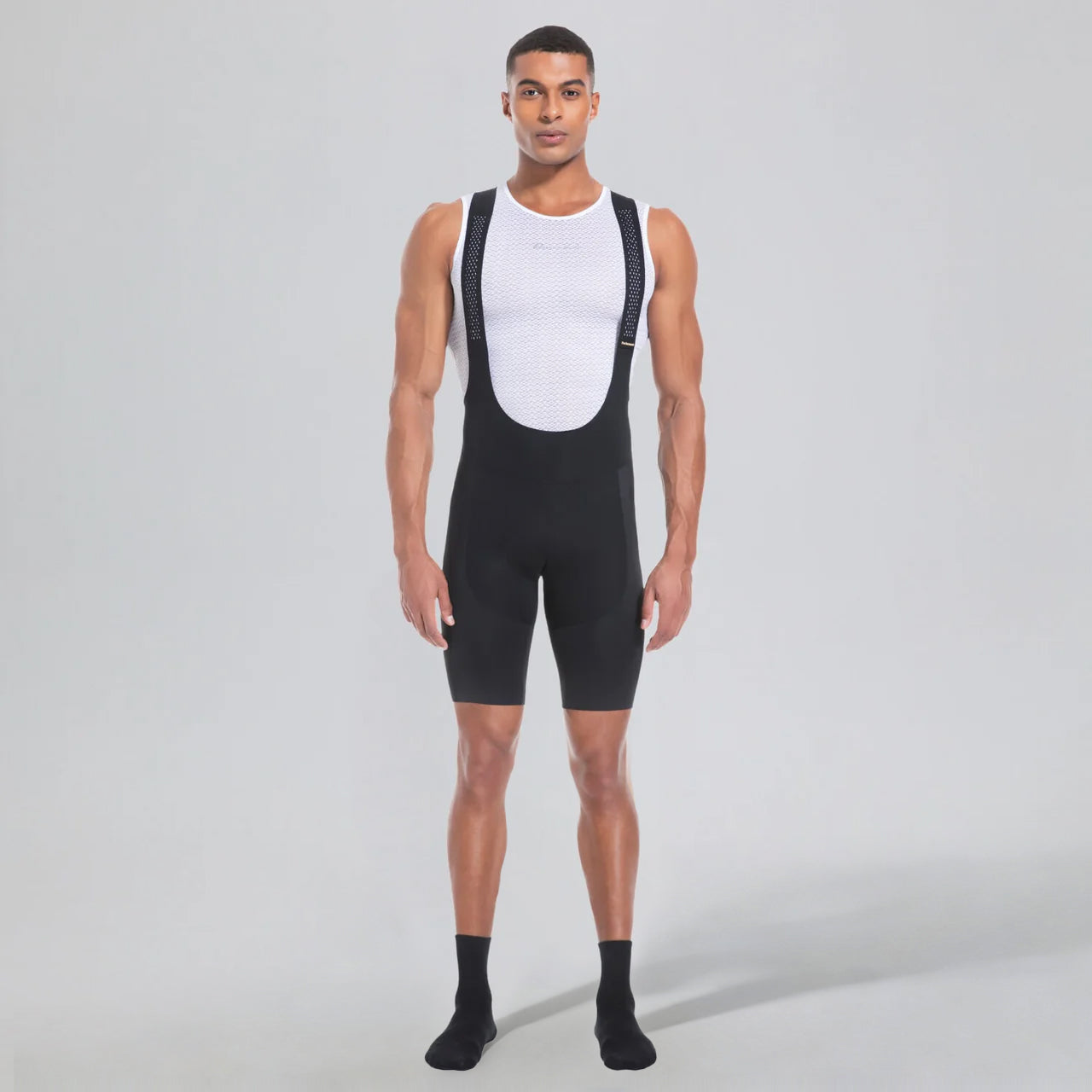
I shift tone now. From designing kits and supplying wholesalers, I’ve learned practical ways to avoid those small failures. First, know the pad specs: density, thickness, and cut must match race distance and saddle type. Second, insist on panel mapping that supports aerodynamics without over-compression — compression is good for muscle support, but overdo it and you lose comfort and range of motion. Third, test seams and bib straps in real sprints and climbs, not only on the mannequin. I recommend riders try a proven model like the men’s elite lightweight road cycling bibs during tempo rides; real-world testing shows where flatlock stitching will rub or where mesh back panels fail to vent. For example, I field-tested a 2023 lightweight Italian lycra sample on the Hellshire climb in August 2023 and trimmed saddle fuss by nearly half — not perfect — but closer.
What’s Next?
Here’s what I want teams and buyers to measure: 1) Fit retention after two hours (does the chamois stay aligned?), 2) Thermal comfort under race intensity (does moisture-wicking architecture work?), and 3) Aerodynamic stability at race speed (do panels hold form at 45+ km/h?). Those three metrics let you compare bibs objectively. I interrupt myself — short note: always re-test after three washes. Then decide. I’ve supplied kits across three Caribbean seasons; trust me, consistent testing saves money and stops riders complaining mid-stage. Final tip: buy from makers who will swap sizes after a proper ride test.
For real-world sourcing and reliable models, check options and team-fit guidance from Przewalski Cycling.